
When it comes to running a successful company, keeping your facility safe, healthy, and operational is essential. Seems like common sense, right? But often, the unseen threats to a business are overlooked — until it’s too late. In a humid and often rainy climate like we have here in Florida, that threat is mold. That’s why industrial mold testing should be part of every organization’s risk-management plan. That’s right, plan on confronting mold. Mold can develop quickly after leaks, humidity issues, or unexpected water intrusions—and when it goes unnoticed, the consequences can be costly and far-reaching. The preventative action to take is to regularly schedule a professional business mold inspection.
Mold doesn’t just stay in the corner of a warehouse or linger behind drywall. It spreads, affects air quality, damages materials, and creates risks that many businesses underestimate until it’s too late.
Understanding the Risk: Why Mold Is More Than a Maintenance Issue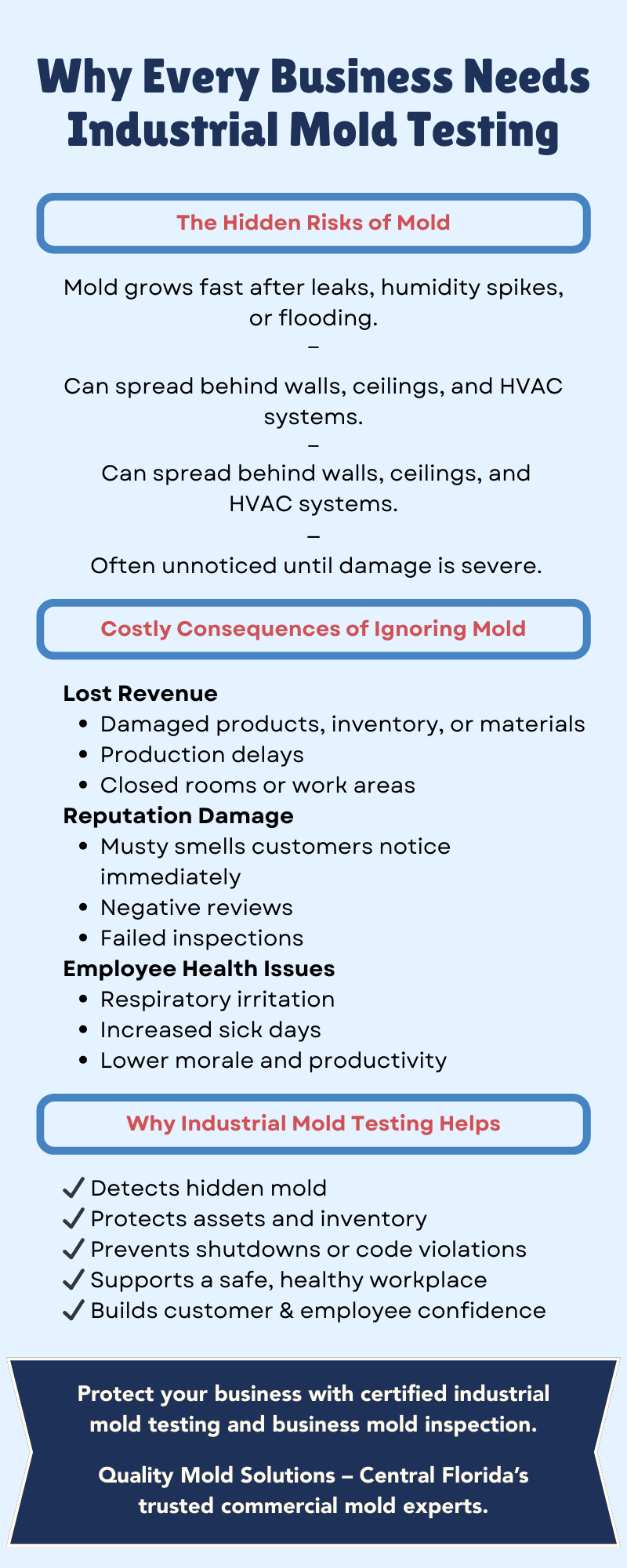
Many business owners think mold is a simple cleanup job, but industrial buildings, warehouses, production facilities, and commercial properties have unique risks that allow mold to spread silently. High ceilings, large HVAC systems, stored inventory, and complex mechanical spaces can hide moisture pockets that are ideal places for mold growth over time.
Once mold takes hold, it can lead to:
-
Loss of product or inventory
-
Expensive remediation and repairs
-
Employee health complaints or absenteeism
-
Failed inspections and code violations
-
Loss of client trust or canceled contracts
Any one of these consequences should send a chill down the most stoic business owner’s spine! Sadly, it’s true, a small leak ignored for a week could turn into a significant business disruption.
The High Stakes of Ignoring Mold in Commercial Spaces
Loss of Revenue
If mold affects the areas where you store inventory, equipment, or customer products, it can lead to spoilage or damage. Businesses like manufacturers, food distributors, retail stores, and storage facilities are prone to particularly high risks. A single contaminated batch or shipment can set a company back thousands of dollars—and may not be covered by insurance if mold prevention was neglected.
Loss of Reputation
This is especially critical in industries where cleanliness and air quality matter. Imagine customers smelling mustiness when they walk into a spa, restaurant, or fitness center. It immediately signals neglect—and those impressions can spread quickly through online reviews that can ruin a good reputation faster than you can say “order up!”
Even professional services are at risk—law firms, real estate offices, medical practices—could jeopardize their credibility if clients notice visible mold or poor air quality.
Loss of Employees
Employee comfort matters, today, perhaps more than ever. Mold exposure can cause headaches, respiratory irritation, fatigue, and allergy-like symptoms. If multiple workers complain, you may be dealing not only with mold but also with HR issues, workers’ compensation claims, or potential OSHA concerns.
Why Industrial Mold Testing Should Be a Priority
Industrial Mold Testing: The First Line of Defense
Commercial and industrial spaces often have large footprints and complex machinery. Industrial mold testing makes sure every part of the building—from production lines to storage areas to office suites—is evaluated for hidden mold. Because mold often grows where HVAC airflow is weak or moisture accumulates, testing for mold helps identify problems long before they disrupt your operations.
Industrial testing typically includes:
-
Air sampling across various zones
-
Surface testing of high-risk areas
-
Moisture mapping of walls, ceilings, and equipment rooms
-
HVAC system inspections
-
Lab analysis that identifies mold species and concentration levels
This data, shown in the mold inspection report, allows your business to create an accurate mitigation plan instead of guessing or reacting too late.
How a Business Mold Inspection Protects Your Facility
Business Mold Inspection: A Complete Facility Assessment
A thorough business mold inspection goes beyond sampling—it identifies the root cause of mold growth. Inspectors will look for failed seals, poor ventilation, plumbing leaks, roof issues, or condensation points. Without addressing these sources, mold will simply return.
A professional inspection provides:
-
Documentation for insurance or compliance
-
Recommendations for repair or remediation
-
A baseline for future inspections
-
Peace of mind for employees and customers
Real Examples of How Mold Can Disrupt a Business
Restaurants & Cafés
Moisture under dishwashing stations or inside walk-ins can quickly lead to mold. One complaint from a customer can escalate into a health inspection—and potentially, a temporary closure. This can be a costly consequence.
Gyms & Wellness Centers
High humidity is common, and mold is easy to smell in mats, locker rooms, or ceiling tiles. Members will not stay long in a facility where the air feels heavy or musty.
Hotels
Rooms closed for remediation reduce occupancy rates, and mold complaints can lead to disastrous online reviews.
Schools & Daycares
Parents expect clean, healthy indoor environments. Mold here can lead to worried parents, complaints, and administrative investigations.
Manufacturing & Warehouses
Lost inventory or contaminated materials can stop production lines and result in large financial losses.
The Smart Choice: Proactive Testing, Not Crisis Management
Waiting until mold is visible often means the damage is already extensive. Regular inspections, periodic assessments, and annual industrial mold testing help maintain safe operations and protect your company’s reputation and revenue.
By incorporating business mold inspections into your facility management plan, you reduce long-term risks and the promise of a healthier environment for everyone who enters your building.

