
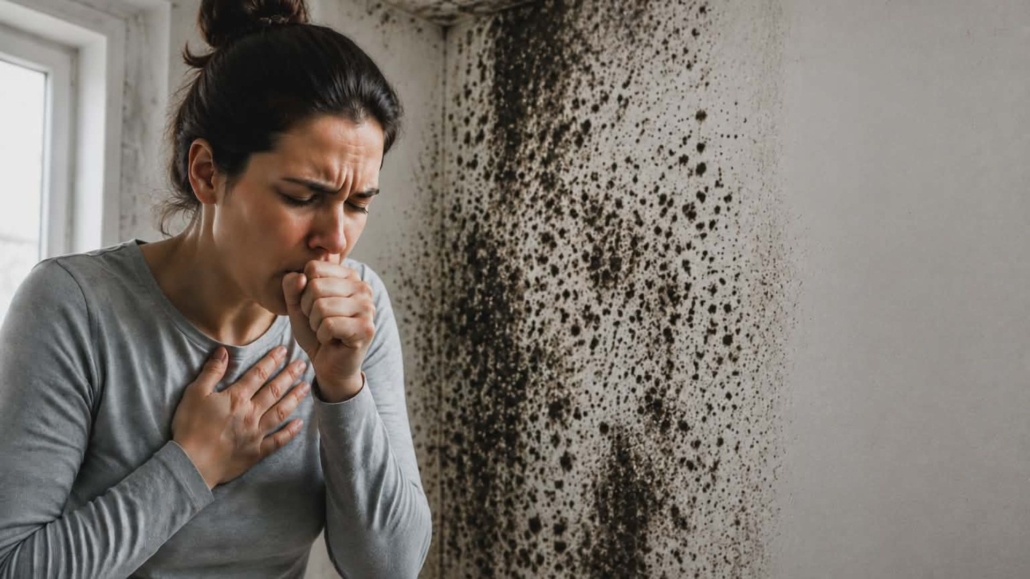
The Hidden Link Between Mold and Respiratory Problems in Your Home
You might not see it. You might not even smell it right away. But if someone in your household has been dealing with a persistent cough, unexplained congestion, or worsening asthma, the answer could be growing quietly behind your walls, under your floors, or inside your air conditioning system.
Mold is one of those problems that rarely announces itself clearly. Instead, it tends to show up through the health of the people living in space. Understanding how mold affects your lungs and respiratory system is one of the most important things you can do as a homeowner, especially here in Central Florida where heat and humidity create near-perfect conditions for mold to grow year-round.
What Is Mold and Why Does It Matter Indoors?
Mold is a type of fungus that reproduces by releasing spores into the air. Mold spores are everywhere. Outdoors, they play a useful role in breaking down organic matter. The problem starts when mold moves indoors and finds the moisture it needs to thrive.
Once a spore lands on a damp surface, it can begin colonizing within 24 to 48 hours. A roof leak, a slow plumbing drip, or even condensation from your air conditioning unit can be enough to allow mold to grow in walls, ceilings, carpet, and ductwork. Indoor mold exposure is different from outdoor exposure because you are breathing that air continuously, often without realizing what is in it.
The health effects of indoor mold are well-documented. Research published through the National Academy of Medicine and referenced by the United States Environmental Protection Agency has linked dampness and mold in homes to a range of allergic and respiratory conditions, particularly in children and people with weakened immune systems.
How Mold Affects Your Lungs and Respiratory System
When you breathe in airborne mold spores, your body’s immune system responds. For some people, that response is mild. For others, it can cause serious and lasting lung conditions.
Allergic Reactions and Mold Allergy Symptoms
One of the most common health concerns from mold exposure is an allergic reaction. If you are allergic to mold, your immune system treats spores like a threat and releases Immunoglobulin E antibodies, triggering symptoms like sneezing, nasal congestion, runny nose, itchy eyes, and skin irritation. These are the hallmark mold allergy symptoms that many people mistake for seasonal allergies.
The difference is timing. Unlike pollen allergies that follow weather patterns, mold allergy symptoms can persist year-round if the source is inside your home. Understanding the full range of symptoms and causes of mold allergies can help you figure out whether what you are experiencing has an indoor source.
Asthma and Mold
Mold can trigger asthma attacks in people who already have the condition, and exposure to high levels of mold indoors may also contribute to the development of asthma over time. The symptoms of asthma made worse by mold typically include wheezing, chest tightness, shortness of breath, and a chronic cough that gets worse at night or in certain rooms of the house.
For children especially, breathing mold spores causes real concern. Studies show that early fungal exposure in damp indoor environments is associated with a higher prevalence of asthma in children. Asthma symptoms that improve when someone leaves the home for a few days are often a strong indicator that indoor mold contamination may be playing a role.
Hypersensitivity Pneumonitis
This is where things get more serious. Hypersensitivity pneumonitis is an inflammatory lung disease caused by repeated exposure to allergens, including certain kinds of mold. It happens when the lungs develop an immune response to inhaled particles, leading to lung inflammation that can feel like pneumonia.
Hypersensitivity pneumonitis may cause fever, chills, muscle aches, and breathing problems that mimic a respiratory tract infection. The condition can become chronic if the source of exposure is not removed. Chronic hypersensitivity pneumonitis can progress to interstitial lung disease and fibrosis, which are serious lung conditions with long-term consequences for lung function.
Many patients with hypersensitivity pneumonitis go undiagnosed for months because the symptoms come and go depending on where they spend their time. A review of the evidence consistently points to damp indoor environments as a major risk factor for this disease.
Other Lung Conditions Linked to Mold
Beyond asthma and hypersensitivity pneumonitis, there are other health effects worth knowing about. Exposure to mold spores in people with weakened immune systems or underlying lung disease can occasionally lead to a fungal infection such as aspergillosis or allergic bronchopulmonary aspergillosis – a condition where the fungus colonizes the respiratory tract and causes both allergic and inflammatory damage.
Mold may also irritate the lungs and upper respiratory tract in people who are not technically allergic to mold. Upper respiratory symptoms like a runny nose, sore throat, and mucus buildup are common in people exposed to moldy environments. Black mold exposure, often associated with Stachybotrys chartarum, has raised particular concern around lower respiratory symptoms, though it is worth noting that mold rarely causes disease in otherwise healthy adults – it is the immune system’s response and the level of exposure that determine how someone is affected.
Types of Mold That Affect Your Health
Not every type of mold carries the same risk, but many kinds of mold found in homes can affect human health in meaningful ways.
- Cladosporium – one of the most common household mold types, often a trigger for respiratory allergies and asthma
- Aspergillus – a fungus that may cause adverse reactions in people with compromised immune systems, including fungal infection
- Stachybotrys chartarum – the dark green or black mold associated with water damage and serious mold exposure concerns
- Penicillium – often found in water-damaged materials, linked to allergic reactions and lower respiratory symptoms
Each type of mold can affect people differently depending on their sensitivity, pre-existing conditions, and the level of exposure. The risks associated with household mold are real, and they deserve more than a quick wipe-down with bleach.
Where Mold Hides and How It Gets Into Your Air
Knowing where mold hides makes it clear why you can breathe it without realizing it. Common locations in Central Florida homes include bathrooms, especially around the shower and beneath sinks, basements or crawl spaces where dampness collects, inside walls after a water leak or flood, and in air conditioning systems where condensation builds up regularly.
Your HVAC system is one of the most overlooked sources of indoor mold. When mold grows inside ducts or on coils, every time your system runs, it distributes airborne mold throughout your entire home. An air filter and regular maintenance help, but they do not eliminate the problem once mold has established itself inside the system.
That is why simply controlling visible mold on a surface is not enough. If you want to control mold at the source, you have to find where moisture is allowing it to survive. A dehumidifier and proper ventilation are useful tools, but they work best when combined with a thorough mold assessment that identifies the actual source.
You can learn more about the hidden dangers of mold in your home and why surface-level solutions often fall short when indoor mold contamination runs deeper than expected.
When to Take Mold Seriously
Most people wait too long before acting. If you or someone in your household has been experiencing respiratory conditions that do not respond to medication, or if you notice a musty odor without a clear cause, those are signs worth investigating.
Some clear indicators that it’s time to get professional help include visible mold growth, a persistent leak that wasn’t properly dried, symptoms that improve when you’re away but return when you come home, and recent water damage from a storm or appliance failure.
Understanding the signs you need a professional mold inspection can help you avoid months of unnecessary health concerns and medical visits.
Mold cannot be reliably identified by sight alone. Different types of mold can look similar, and mold may also hide where you cannot see it at all. Laboratory-backed air and surface sampling, combined with thermal imaging and moisture meters, gives you actual data rather than guesswork. That is why professional mold testing services are far more reliable than anything you can assess on your own.
What a Professional Mold Assessment Actually Involves
At Quality Mold Solutions, the process starts with a thorough visual inspection and then moves to advanced tools depending on what is found. Moisture readings, thermal imaging, and, when appropriate, air sampling and surface sampling give a complete picture of what is happening in your indoor environment.
Clients receive a detailed report with photos, diagrams, and clear recommendations. If remediation is needed, the company provides a remediation protocol so that any mold removal work follows a scientifically sound process. Post-remediation verification then confirms the work was done correctly.
The goal is not to alarm anyone. It is to give you accurate, actionable information so you can make informed decisions about your home and your health. To understand why indoor air quality matters for your health and how regular assessments can protect your family, it helps to think of mold testing the way you think of any other home maintenance – proactive rather than reactive.
Conclusion
Mold and respiratory problems are more closely connected than most homeowners realize.
From allergic rhinitis and asthma to serious conditions like hypersensitivity pneumonitis, the health risks caused by mold indoors are real and often underdiagnosed. If you have concerns about air quality in your home, do not wait for symptoms to worsen. Quality Mold Solutions offers science-backed mold assessment and testing throughout Central Florida. Reach out today and get the clarity your household deserves.
