
Mold in AC Unit: Signs, Health Risks, and How to Get Rid of It Fast
If your air conditioner has been running and you notice a musty smell every time it kicks on, that is not something to brush off. That odor is often one of the earliest clues that mold is growing in your air conditioner, and in Florida’s heat and humidity, it is a surprisingly common problem.
Air conditioners are prone to mold because of the environment they create. Warm air gets pulled in, cooled down, and moisture naturally condenses on the evaporator coil. Add dust, debris, and poor drainage, and you have created ideal conditions for mold growth inside a system that then blows air throughout your entire home.
This article breaks down exactly what to look for, why it matters for your health, and how to deal with it the right way.
Why Air Conditioners Are Such a Breeding Ground for Mold
Air conditioners are prone to mold for a reason that comes down to basic biology. Mold needs moisture, warmth, and an organic food source to grow. Your AC system delivers all three on a regular basis.
The evaporator coil pulls warm air across a cold surface, which creates condensation. That moisture is supposed to drain through the condensate drain line, but when that line gets clogged with dirt, algae, or debris, the water backs up. Combine standing water inside a dark unit with dust buildup on the coils and filter, and you have created an ideal environment for mold to take hold.
Central Florida’s climate makes this even worse. High humidity means there is more moisture in the air being pulled into the system, which puts greater demand on drainage and increases the risk of mold forming inside your AC unit.
Signs of Mold in Your Air Conditioner
Identifying mold early is the key to keeping it from spreading. Here are the most common signs of mold growth to watch for:
- A persistent musty or earthy smell. If turning on your air conditioner fills the room with a smell similar to a damp basement, that is one of the clearest indicators. Understanding what a musty smell in your home could indicate is a good first step before assuming the worst or ignoring the problem.
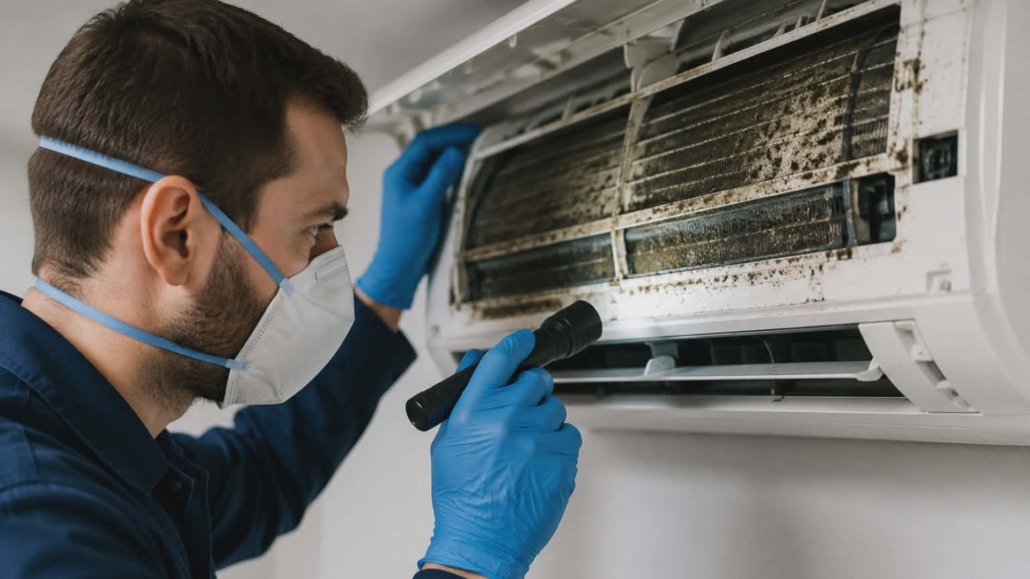
- Visible mold around vents or inside the unit. Visible mold growth can appear as dark spots, fuzzy patches, or black or greenish streaks around air vents, on the air filter, or inside the unit itself. If you see it around the unit or on the grille of a window air conditioner, there is likely more hidden deeper inside.
- Allergy or asthma symptoms that worsen indoors. If household members are sneezing, coughing, experiencing eye irritation, or dealing with respiratory tract infections more frequently when the AC is running, mold could be the cause. Prolonged exposure to mold spores throughout your home can aggravate a mold allergy and trigger asthma flare-ups.
- Signs of mold growth on the air filter. Pull out your air filter and inspect it. A filter caked with dark, discolored growth is a clear warning sign. Air conditioner filters that are overdue for replacement allow mold spores to cycle back into your indoor air.
If you are noticing any of these warning signs, do not wait. Review the warning signs you need a professional mold inspection to get a clearer picture of what your next step should be.
Health Risks of Mold in Your AC System
The health risks tied to mold in your air conditioner go beyond a little sneezing. When an AC unit has mold, it does not just sit there. It continues to distribute mold spores throughout your home every time it runs, because that is what your air conditioning system is designed to do – move air.
Mold exposure can lead to a range of symptoms depending on the person. For generally healthy individuals, the health effects often include nasal congestion, coughing, throat irritation, and headaches. For people with a mold allergy, asthma, or conditions that affect the immune system, the symptoms and health effects of mold allergies can be significantly more serious.
You can learn more about the symptoms and health effects of mold allergies if you or a family member seems to react every time the air conditioner runs.
Significant health risks arise with prolonged exposure to mold, especially for children, the elderly, and people with compromised lung function or weakened immune systems. HVAC mold is particularly dangerous because the air ducts distribute mold spores from the air into every room, making it impossible to escape the exposure without addressing the source.
How to Remove Mold from Your AC Unit
Before you do anything, safety comes first. When you notice mold or suspect mold inside your AC, wear gloves, a mask, and eye protection. Disturbing mold without precautions can release additional spores.
For a window air conditioner or window AC unit:
A window unit is more accessible than a central system, which makes it easier to clean mold directly. Turn off and unplug the unit. Remove the front panel and filter. Use a solution of water and a small amount of bleach to clean mold from plastic components, metal parts, and the filter housing. Allow everything to dry completely before reassembling. Replace air filters if they show visible mold or heavy buildup.
However, if the mold is deep inside the unit or has been present for a long time, cleaning the surface may not fully remove mold spores. In that case, replacement or professional cleaning may be the better option.
For central air conditioning systems:
Central systems are more complex. A certified professional should inspect and clean mold from the evaporator coil, drain pan, and air ducts. Attempting to clean mold in an AC system this size without the right tools and training often spreads the problem rather than solving it.
Understanding the differences between professional mold testing and DIY kits can help you decide when it makes sense to call in an expert versus handling something yourself.
How to Prevent Mold from Growing in Your Air Conditioner
Once you address the current mold issue, preventing mold in air conditioning systems going forward is about consistent maintenance and smart habits.
- Replace air filters regularly. A clean air filter does more than improve airflow. It removes dust and organic particles that allow mold to grow. In Central Florida’s climate, check filters monthly and replace air filters every 30 to 60 days if the system runs frequently.
- Keep humidity in check. A dehumidifier can help reduce excess moisture in the home, which helps prevent mold growth. Most HVAC systems are not designed to remove all humidity on their own, especially during Florida’s rainy season.
- Clear the condensate drain line. Flush the drain line monthly with water or a diluted bleach solution to prevent clogs that cause standing water inside the unit. This one step goes a long way to help prevent mold growth before it starts.
- Consider an air purifier with HEPA filtration. A quality air purifier can remove mold spores from the air and help minimize the risk of mold taking hold in your home. Look for models that include HEPA filtration and air purification stages designed for biological contaminants.
- Schedule routine professional inspections. A trained eye can catch early signs of mold growth in your air conditioner before they become a larger problem. Regular maintenance combined with occasional professional inspection is the most reliable way to prevent and remove mold issues over time.
For a broader look at what mold can do when left unchecked, it is worth reading about the hidden dangers of mold growth inside your home.
When to Call a Professional
If you suspect mold in your AC, have already tried cleaning, or are seeing visible mold alongside health symptoms, it is time to bring in a qualified mold assessor. A professional can identify exactly where mold forms, how far it has spread, and what needs to happen to fully address mold – not just manage it.
Your home’s air quality and your health go hand in hand. Concerned about mold in an AC system that serves your entire home or business? A certified mold inspection gives you science-backed answers, not guesswork.
Conclusion
Mold in your AC unit is a real problem with real consequences for your health and indoor air quality. The good news is that it is manageable when you act early. Learn the signs, take smart steps to prevent mold from growing, and do not hesitate to get professional help when the situation calls for it.
Quality Mold Solutions serves homeowners and property managers throughout Central Florida with thorough, honest mold assessments. If you want to protect your home and health, reach out today and get the answers you need.

